
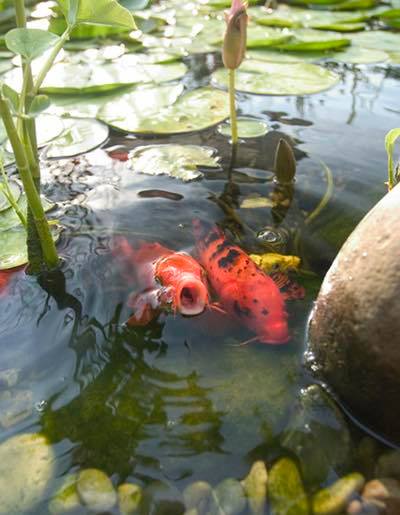
Every spring we get the same anxious message: "It hit 65 today — can I finally feed my koi?"
We get it. You've watched your fish sit on the bottom all winter, and the first warm afternoon makes you want to dump in a scoop and welcome them back. Please don't. More koi die from eager spring feeding than from the whole winter that came before it.
Here's why, and here's how to do it right.
Feed the water temperature, not the calendar
Koi are cold-blooded. Their entire digestive system runs on water temperature, not the number on your car's dashboard. A sunny 65-degree afternoon in March means almost nothing when the water down where your fish are living is still sitting in the 40s.
So the first thing you need isn't food. It's a thermometer you can drop to mid-depth. Below about 50 degrees, a koi essentially can't digest — food goes in, sits there, and rots inside the fish. That's the whole tragedy in one sentence.
The simple version
- Water under 50 degrees: feed nothing. They're fine. Cold koi are slow, not starving.
- Water holding steady around 50 to 55: start with a wheat-germ, cold-water food, tiny amounts every couple of days.
- Consistently in the low 60s and climbing: work up to once a day, still going light.
- Reliably 65 and warmer: now you can move to a richer, higher-protein growth food and feed more.
The word doing all the work there is consistently. One warm day doesn't count. Wait for the water to hold.
Why the restraint pays off all year
Spring feeding isn't about fattening fish back up. It's about waking their system gently so they're strong and ready when the real growing weather arrives. Rush it and you don't just risk the fish — you dump nutrients the pond can't use yet, and you've basically catered the season's first algae bloom.
There's also a piece that happens before the first pellet: the pond has to be opened properly. All that leaf and muck left over from winter releases ammonia as the water warms, and your biological filter takes weeks to fully wake back up. Feed heavily into that and you're stacking stress on stress.
That's the part we handle on the ponds we look after. A proper spring opening clears the winter debris, the filter gets restarted and checked, and we test the water before anyone tells you it's safe to feed. Clean, test, then feed — in that order — prevents more lost koi than anything else we do.
If you'd rather not stand at the edge of the pond every morning second-guessing the thermometer, that's exactly what our maintenance packages are for. Want a hand getting your koi pond onto a real spring rhythm? Start a conversation or call 215-880-6811.