
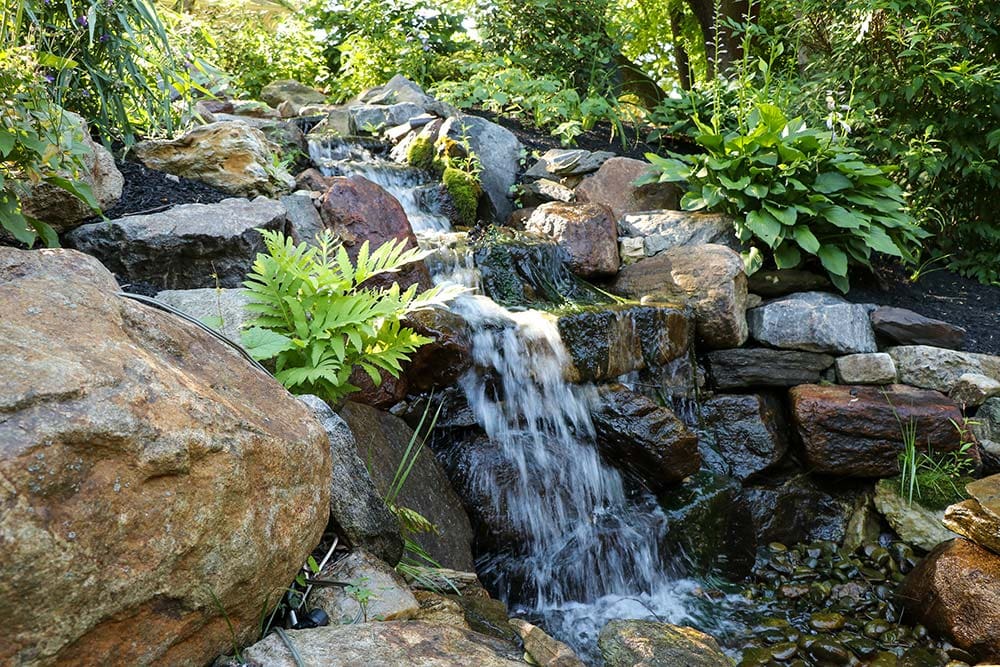
Brown, murky water. There's nothing quite like walking out to your pond expecting a mirror and finding what looks like weak coffee instead. So here's the question people keep asking us: will adding a disappearing waterfall fix it?
Short answer — it helps, and sometimes a lot. But it helps for reasons worth understanding.
Why water turns brown in the first place
Usually it's one of a few culprits: tannins leaching from leaves and mulch, stirred-up sediment on the bottom, or a filtration setup that's fallen behind the workload. Brown isn't the same problem as green — green is algae, brown is typically organic debris and fine sediment hanging in the water. Different cause, different fix.
Moving water is the antidote to stagnant water. A disappearing waterfall keeps the whole volume circulating instead of sitting still, and as water tumbles over stone it pulls in oxygen. More oxygen means the beneficial bacteria that break down debris can actually do their job.
Where a waterfall earns its keep
Circulation plus aeration plus good filtration is the trio that clears water and keeps it clear. Add a waterfall and you're feeding all three at once. Pair it with a proper cleaning to reset what's already settled on the bottom, and most ponds turn a corner fast.
That said, a waterfall won't outrun a bigger issue. If your filtration is undersized or the pond's overdue for a real clean-out, the water will keep fighting you. Sometimes the honest fix is a combination — better flow, better filtration, and clearing out the muck that's been building for years.
Not sure which camp your pond is in? That's exactly the kind of thing we can diagnose. We've cleared up a lot of coffee-colored ponds across the Philadelphia area, and we can usually tell pretty quickly whether a waterfall solves it or just dresses it up. Give us a shout at 215-880-6811 or get in touch and we'll take a look.