
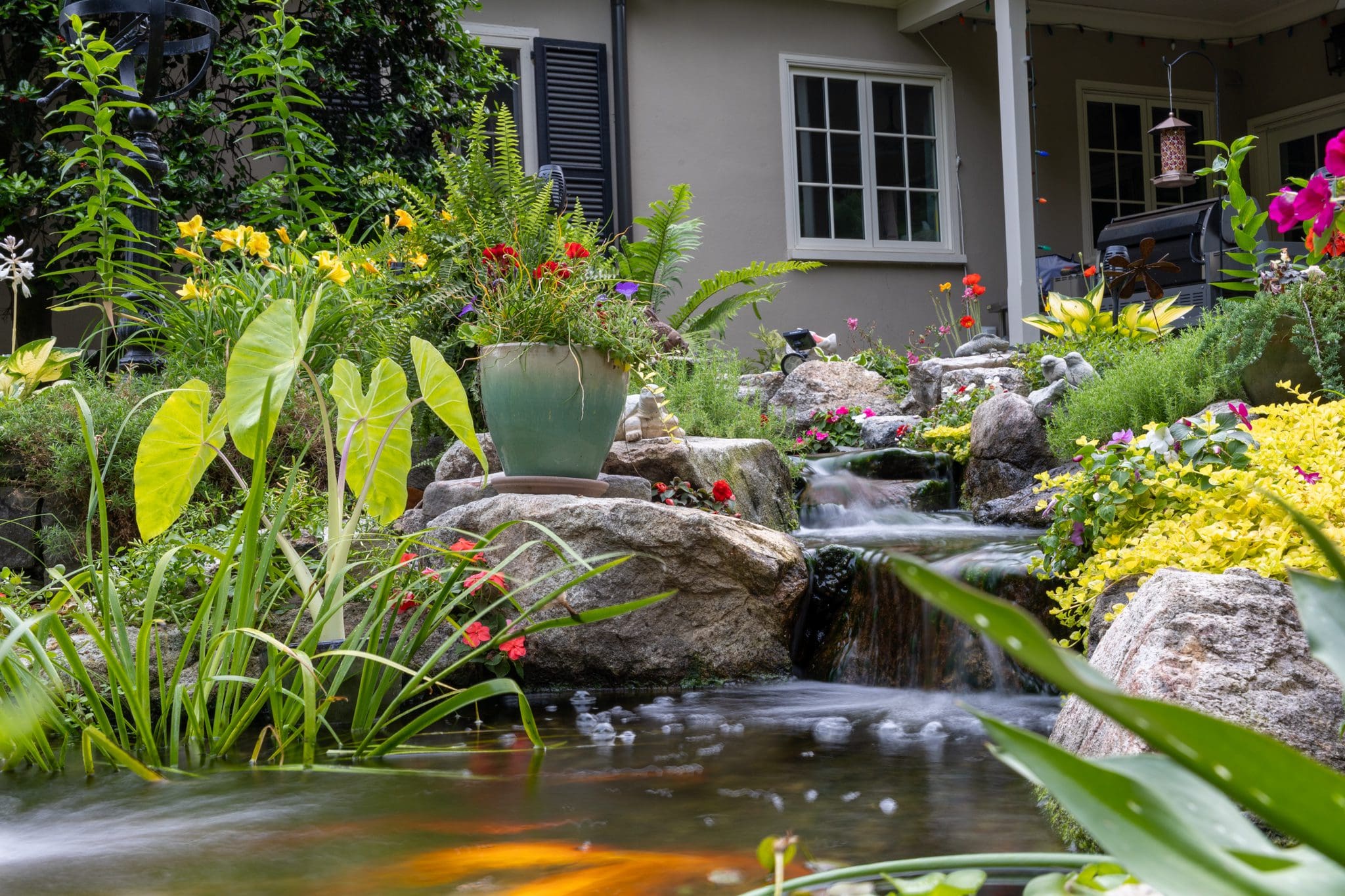
Nothing ruins a morning quite like counting your koi and coming up one short.
If you keep fish in Pennsylvania, sooner or later something is going to take an interest in them. Herons are the big one — patient, prehistoric-looking birds that'll stand at the edge of your pond like they own it. Raccoons work the shallows at night. The occasional neighborhood cat tries its luck too.
The good news: a few smart moves make your pond a much harder target.
Give your fish somewhere to hide
This is the single best defense. Koi that can vanish the instant a shadow passes overhead are koi that survive. Build in:
- Depth — a pond with a section at least two feet deep gives fish a safe zone herons can't wade into
- Fish caves, ledges, or a stretch of tunnel where they can duck out of sight
- Plant cover like lilies that break up the surface and hide what's below
A lot of this can be built right into the design, which is one of the things we think about during a pond renovation or a new build.
Make the approach annoying
Herons like to land and walk in. Steeper edges, larger boundary stones, and a bit of scattered rock make that landing strip less inviting. Motion-activated sprinklers work surprisingly well — a sudden burst of water sends most visitors packing. Netting is the sure thing when a heron is actively hunting, though it's more of a temporary shield than a look you want year-round.
A word on decoys
The plastic heron statue? Herons aren't always fooled, and some will actually come closer thinking they've found company. Move it around now and then if you use one, and don't count on it as your only line of defense.
The real answer is layers: depth, cover, and a few deterrents working together so no single trick has to do all the work. A well-designed koi pond protects its fish by its very shape.
Losing fish to predators and not sure how to stop it? Call us at 215-880-6811 or reach out and we'll help you make your pond a fortress.