
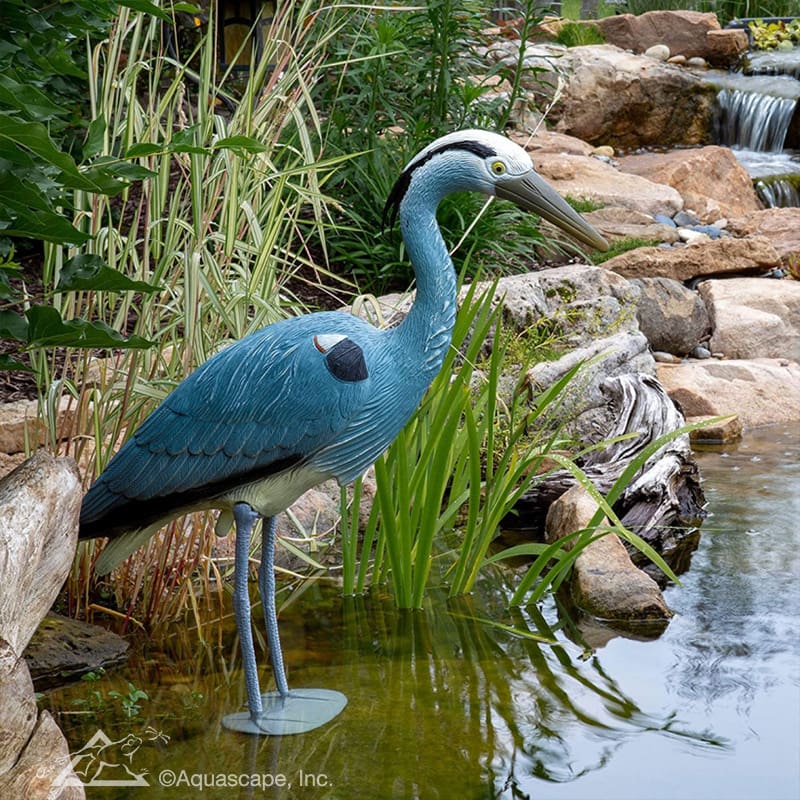
The number one thief of backyard koi around Philadelphia is not a raccoon, a neighbor's cat, or bad luck. It is a bird that looks almost peaceful standing at the edge of your pond.
The great blue heron. Four-foot wingspan, a beak built like a spear, and the patience of a professional. One heron that finds an unprotected pond will come back morning after morning until the fish are gone. But herons are not the only ones on the guest list, and the rest of them hunt differently.
How to tell you have a predator
The obvious sign is fish that are simply gone. People also find half-eaten fish in the pond, which is usually a bird.
The subtler sign is behavioral. If your fish used to come up at feeding time and now hide when you walk out, something has been hunting them. Koi that have been worked by a heron stay deep and stay scared, and that change in behavior often shows up before you notice the count is down.
Know your suspects
Each one has a different method, and defending against one does not automatically cover the others.
Great blue heron. Wades in from a shallow edge on those long legs, stands dead still, and waits for a koi to drift into range. Strikes at dawn and dusk, when the yard is quiet. They are creatures of habit: a heron working your pond will be back tomorrow at the same hour unless you give him a reason not to. In early spring they return to the area looking for feeding grounds, and from the air your bright koi look like a lit sign.
Raccoons. They hunt with their hands. They wade the shallows at night feeling around for anything that moves, and they will dig at plants and rockwork while they are at it. A raccoon will not usually swim for a fish, which matters for how you beat him.
Mink. The ones nobody expects. Small, fast, fearless swimmers that can clear a pond in a night or two.
Cats. Work the edges, batting at fish that cruise near the surface.
Kingfishers and egrets. Like herons, they hit from above at first light.
Snapping turtles, and the occasional osprey, round out the list.
The defense that holds is structural
Every gadget on the market is a supplement. The thing that actually protects fish is how the pond is built.
Depth. A pond with a section at least two feet deep, and deeper is better, gives koi water a wading heron cannot reach and a raccoon will not swim into. This is the single biggest factor.
Steep sides. Herons and raccoons both need a shallow shelf to work from. A gently sloping edge with uniform shallow water is a buffet with an open sign on it. Take away the wading stance and you take away the hunt.
Fish caves. A place for fish to vanish the instant a shadow crosses the water. This is the deterrent we recommend more than any other, and it is the first thing we build in. A cave only works if it sits deep enough at the bottom of the pond, and it takes nothing away from how the pond looks. More on this in what a fish cave is and why your koi pond needs one.
Rock overhangs and plant cover. Water lilies and floating plants break up a bird's sightline into the water and buy fish the seconds they need. Marginal plants and overhangs do the same at the edges, and they make the pond look better while they do it.
We design all of this into our koi ponds from the start, because it is far easier to build than to retrofit.
Deterrents worth running
Motion-activated sprinklers. A sudden blast of water when something steps into range. Unlike most tricks, this one keeps surprising, which is why it stays effective. The commonly sold version is called a Scarecrow.
Decoys, but only if you move them. This is where advice gets contradictory, so here is the honest version. A heron decoy that sits in the same spot all season is useless, and some herons will land right next to it. A decoy you relocate regularly does work, because herons would rather not feed where another bird has already staked a claim. Move it about every three days in spring, when the birds are actively scouting, and every couple of weeks through the summer once they have settled into routines. Alligator decoys work on the same principle from the other direction, making the predator think something is hunting it. Floating decoy fish can also buy time by getting snatched first.
Netting. The only true guarantee, and the least attractive option. It stops birds cold. The tradeoffs are real: it changes how the pond looks, and plants cannot grow through it without tearing holes. For a couple of high-pressure weeks during migration, it beats losing a fish you have raised for eight years.
Fishing line. Strung across the pond in a crisscross pattern, it trips herons up as they try to land. It works, but be aware it can catch other birds too.
A radio on a motion sensor. Sudden noise spooks predators. Cheap and surprisingly effective.
A dog. Genuinely one of the best deterrents there is, though not every dog has the temperament for it. Bird dogs tend to: Labradors, spaniels, pointers, English setters.
Why one trick is never enough
A heron decoy does nothing against a raccoon. Netting stops birds but not a determined mink. A motion sprinkler covers the ground approach and nothing from the air.
The only defense that holds is layered, where each measure covers another's blind spot. A deep pond with steep sides, a cave to hide in, and one active deterrent makes your pond more trouble than it is worth. Herons are efficient above all else. They move on to easier water.
The other half of it is not letting anything become routine. Move the decoys. Change which deterrent is running. Predators learn fast, and anything that stays exactly the same stops working.
Do not overlook the boring things either. A tidy pond edge gives predators fewer places to stage from, and pond lighting makes nocturnal visitors feel exposed while making your evenings better.
When the fix is structural
If you have tried three gadgets and you are still losing fish, the problem is almost certainly the build, not the gadget. Usually it is a pond that is too shallow, or a plant shelf wide and shallow enough that a raccoon can stand on it and work.
That is a renovation conversation. Adding depth, steepening edges and putting in a proper cave takes the target off your fish permanently, and it is work we do regularly on ponds other people built.
Losing fish and not sure who is to blame
Call us at 215-880-6811 or get in touch. We will walk the pond, work out where it is vulnerable, and close the gaps.