
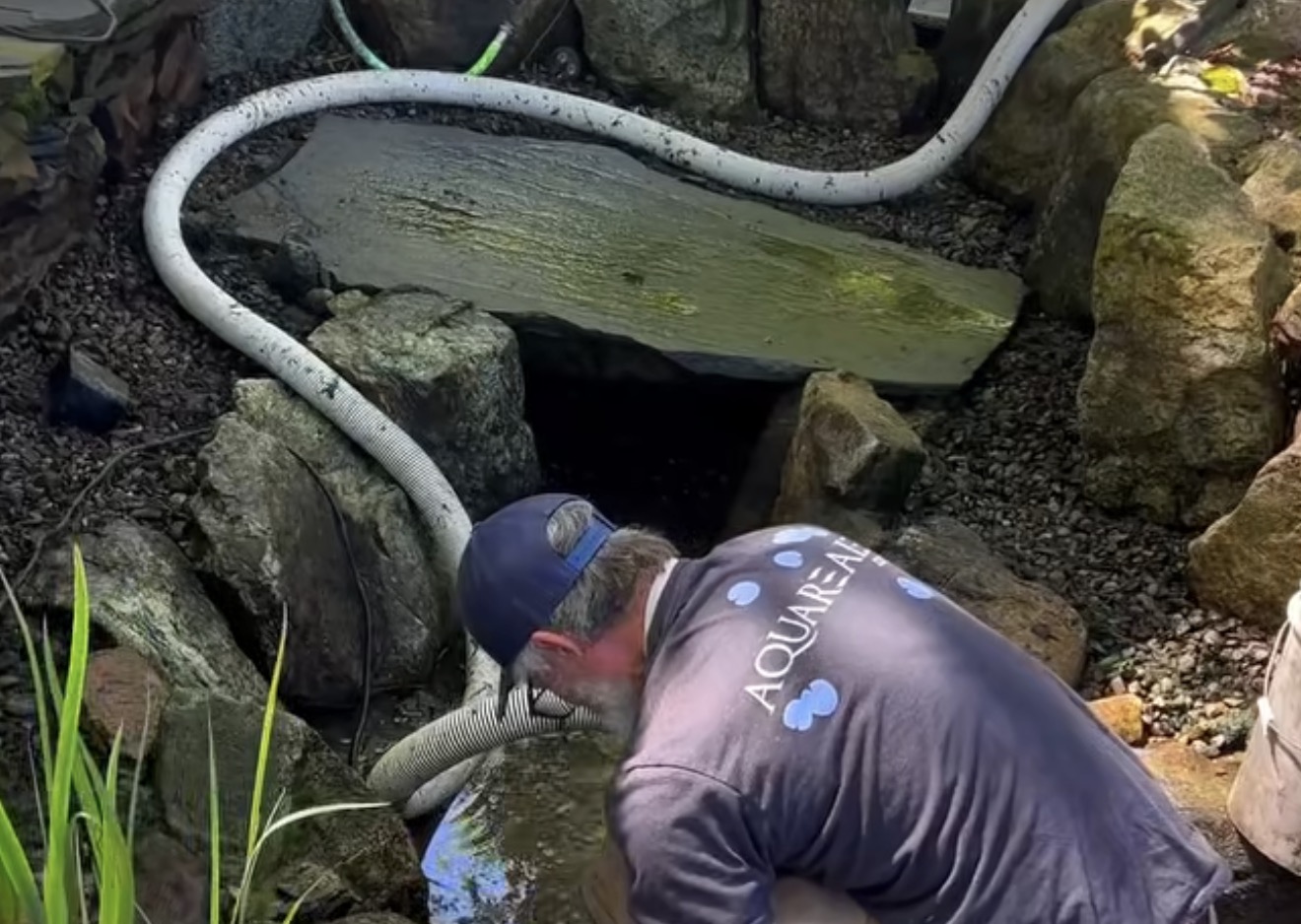
"Fall cleanout" is one of those phrases that means something very specific to us and almost nothing to a homeowner hearing it for the first time. People nod along, book it, and then are genuinely surprised when a truck shows up and the pond gets taken apart.
So here is what the visit actually looks like, start to finish. Every pond is a little different, but the shape of the day is the same.
Before we touch the water
The first thing our tech does is look at the pond, not work on it. Where is the water line compared to where it should be. Is the waterfall flowing the way it did in June. Any new settling along an edge, any stone that has shifted, any spot where a liner is starting to show. Fall is when problems are easiest to see, because the plants have died back and the whole structure is visible again.
This is also the honest moment to catch a slow leak. A pond that has been quietly losing a little water all summer will show it now, and finding it in October is a very different conversation than finding it in March after a winter of it getting worse. If something looks off, we tell you that day.
The debris comes out
Leaves, twigs, and the sludge layer that built up over the season all get removed. This is the part that does the heavy lifting for your water quality, because everything we take out now is organic material that would otherwise spend the winter breaking down under the ice and using up oxygen your fish need.
Filters and the skimmer get cleaned out properly. The pump gets pulled, inspected, and either serviced or flagged if it is on its way out. Better to know in October.
Plants get cut back
Dying foliage that stays in the water is just more decomposition waiting to happen, so hardy marginals get trimmed down and tropicals come out entirely. Lilies get cut back and moved to the deepest part of the pond where they will overwinter fine. It looks a little stark when we are done. That is correct. It fills back in fast.
The fish get set up for winter
By the time water temperatures settle into the low fifties, your koi are done with regular food and their digestion has essentially shut down. Feeding past that point is one of the more common ways well-meaning owners hurt their fish. We will tell you where your pond is on that curve and when to stop.
Depending on the pond, this is also when a de-icer or aerator gets set to keep a gas exchange hole open in the ice all winter. That opening is not for warmth. It is so the gases coming off the bottom have somewhere to go. It matters more than almost anything else you do for koi in a Pennsylvania winter.
Then we shut it down or set it to run
Last, the feature is either winterized and drained down or configured to run safely through the cold. That decision depends on your pond, your fish, and frankly your appetite for checking on it in January, and it is worth its own conversation.
When to book it
The sequence that works is netting first, in late September or early October, then the cleanout after the leaves have finished falling, usually somewhere from early to late November depending on the year and how many trees you are dealing with.
Doing the cleanout first and skipping the netting is the version we would talk you out of. You would pay for a clean pond and then let the trees refill it.
What a fall visit involves varies with the size of the pond and how many trees are working against it, and our pond cost guide walks through the ranges. Clients on a maintenance program have it built into the year already. Either way, November books up quickly because every pond in the region needs the same short window. If you want to be on the schedule, reach out or call 215-880-6811.