
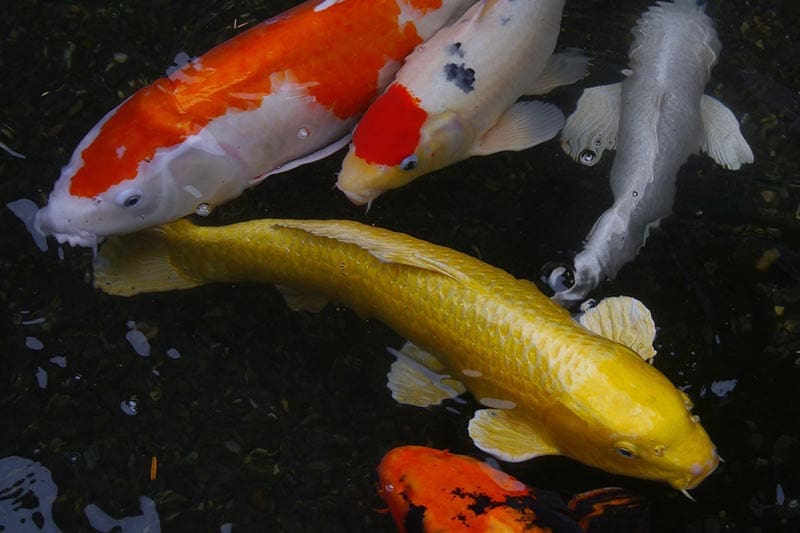
We build and maintain ponds, we do not run a fish store. So this is not a sales pitch, it is the advice we give clients who ask us where to go and what to look for, which happens often enough that it is worth writing down.
Judging a koi seller in five minutes
You are not really evaluating the fish, you are evaluating the operation. Walk in and look at the water first, not the koi.
Is the water clear and are the systems obviously running? Good sellers over filter. If the holding tanks look tired, everything in them is under stress.
Are sick fish visible for sale? One fish with an ulcer in a shared system means every fish in that system has been exposed. Walk out. This is the single highest value observation you can make.
Will they tell you where the fish came from? Domestic or imported, and from whom. A seller who knows and says so is a seller who cares.
Do they ask you anything? Somebody who asks about your pond volume, your filtration, and how many fish you already have is trying to sell you the right fish. Somebody who just bags what you point at is moving inventory.
Picking individual fish
Watch them swim before you look at color. You want fish that are alert, holding position confidently, fins spread rather than clamped. Check that the body is symmetrical and the fins are undamaged. Skip anything sitting apart from the group, hanging near the surface, or scraping against surfaces.
Color and pattern are the fun part and the expensive part, and they are worth considerably less than health. A stunning fish that brings a pathogen into your pond is the most expensive fish you will ever buy.
And buy for your pond, not your eyes. Koi get large, and the most common mistake we see is a pond stocked for the fish people bought rather than the fish they will have in five years.
The step almost everyone skips
Quarantine. Two to four weeks in a separate system before new fish join your population. Every time, including from a seller you trust.
We understand why people skip it. We also get the calls afterward. Full detail in is my koi sick.
Plants worth the money in our climate
Water lilies do the most work of anything you can buy, shading the surface and holding down algae. Hardy varieties overwinter here without drama. Tropicals are gorgeous and are effectively annuals in this climate, so buy them knowing that.
Marginals along the shelves, things like pickerel rush, iris and sweet flag, pull nutrients and soften the edge where the liner meets the world. Submerged oxygenators do quiet chemical work nobody notices.
One caution: a few aggressive aquatic plants are genuinely invasive in Pennsylvania waterways and should not go in a pond that can overflow toward a creek. A good local seller will steer you off those. See aquatic plants offer great benefits and keeping koi from eating your plants, because they will try.
If you would rather have someone handle stocking and planting as part of a build or a seasonal service, that is what we do.