
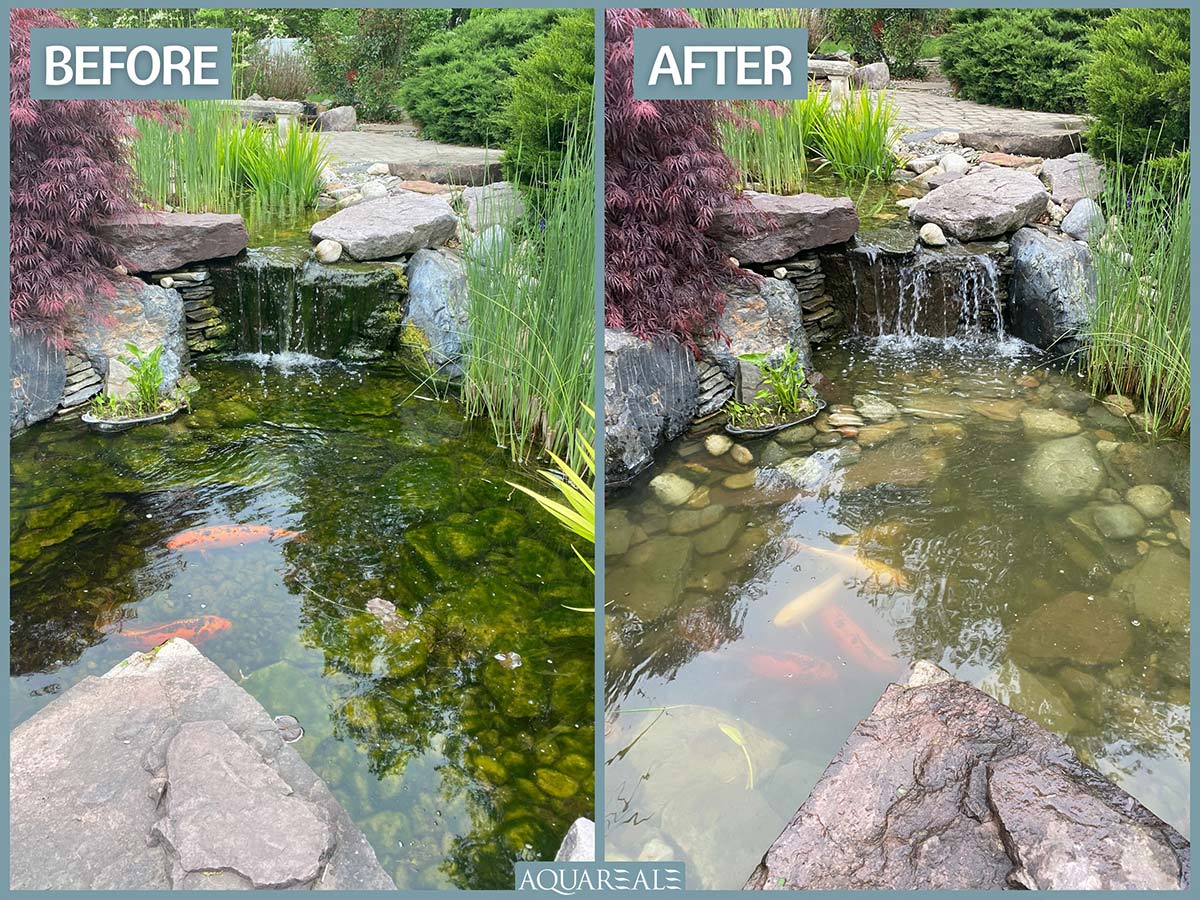
Understanding Pond Algae
Algae is the most common complaint pond owners have, and also one of the most misunderstood. Green water, string algae, brown sludge on the rocks, a film on the surface. These look like different problems, but they often share the same root causes.
Understanding what is actually happening in your pond makes it a lot easier to fix, and to keep from coming back.
Green Water vs. String Algae
These are the two types of algae most pond owners deal with, and they are different enough that they often need different approaches.
Green water is a single-celled algae bloom suspended in the water column. It turns the water the color of pea soup. The pond might smell fine, the filter might be running, the fish might be active, but the water is completely opaque. You cannot see the fish through it.
String algae, sometimes called filamentous algae, grows on rocks, in the waterfall, along the bottom, and anywhere it can attach. It looks like green hair or clumps of moss. String algae can take over a pond fast in spring and early summer when the water is warming up and nutrient levels from winter debris are at their highest.
Why Algae Grows
Algae needs three things: sunlight, nutrients, and time. When any of those are in excess, algae has an advantage.
Nutrients in your pond come from fish waste, decaying plant matter, and organic debris like leaves. If your filtration system is undersized for your fish load, nutrients build faster than the filter can process them. Algae fills in where the filter cannot keep up.
Sunlight is harder to control, but aquatic plants help. Water lilies, lotus, and marginals compete with algae for the same nutrients. A pond with good plant coverage does not give algae the same opening. A pond with no plants and full sun exposure gives algae almost everything it needs.
Beneficial bacteria, specifically the bacteria that colonize the filter media and the gravel in a properly built ecosystem pond, help keep nutrient levels balanced. When those bacteria colonies are healthy, algae has less to feed on.
What Does Not Work
Algaecides. They kill the algae, but they do not address why it grew. You will treat the pond, watch the algae die, and have it back within weeks. Repeat treatments also stress fish and disrupt the bacteria that are actually doing the real work of keeping the pond in balance.
Shade cloths over the pond surface. They reduce sunlight, but they create other problems like reduced oxygen exchange and are not a long-term answer.
Blanket weed treatments that promise quick fixes. Some of them work temporarily. None of them solve the underlying issue.
What Does Work
Fixing the nutrient load is the real answer. That usually means one or more of the following:
- Cleaning out the accumulated muck and debris that is feeding the algae
- Adjusting or upgrading filtration if the system is undersized for the fish load
- Adding aquatic plants to compete with the algae
- Introducing beneficial bacteria treatments as part of a regular maintenance routine
For string algae specifically, manual removal combined with addressing the source is the most effective approach. Removing it by hand (a pond brush or string algae wand works well), paired with improving water quality, gives you a head start. If you leave the root causes in place, it grows back.
Barley straw is a natural option that can reduce algae over time. It does not kill existing algae, but it creates conditions where algae grows more slowly. It is a maintenance tool, not a solution to an active bloom.
When You Are Past the Point of DIY
If your pond has been green for months, if you have tried multiple treatments without lasting results, or if algae is combined with fish health issues, that is a sign the underlying ecosystem is out of balance in a way that needs professional assessment.
AquaReale has been diagnosing and correcting algae problems in the Philadelphia area for over 25 years. Sometimes it is a straightforward nutrient or filtration fix. Sometimes the pond itself was not built in a way that supports clear water long-term, and renovation is the right answer. We will tell you honestly which situation you are in.
Start a Conversation and let us take a look at what is going on in your pond.