
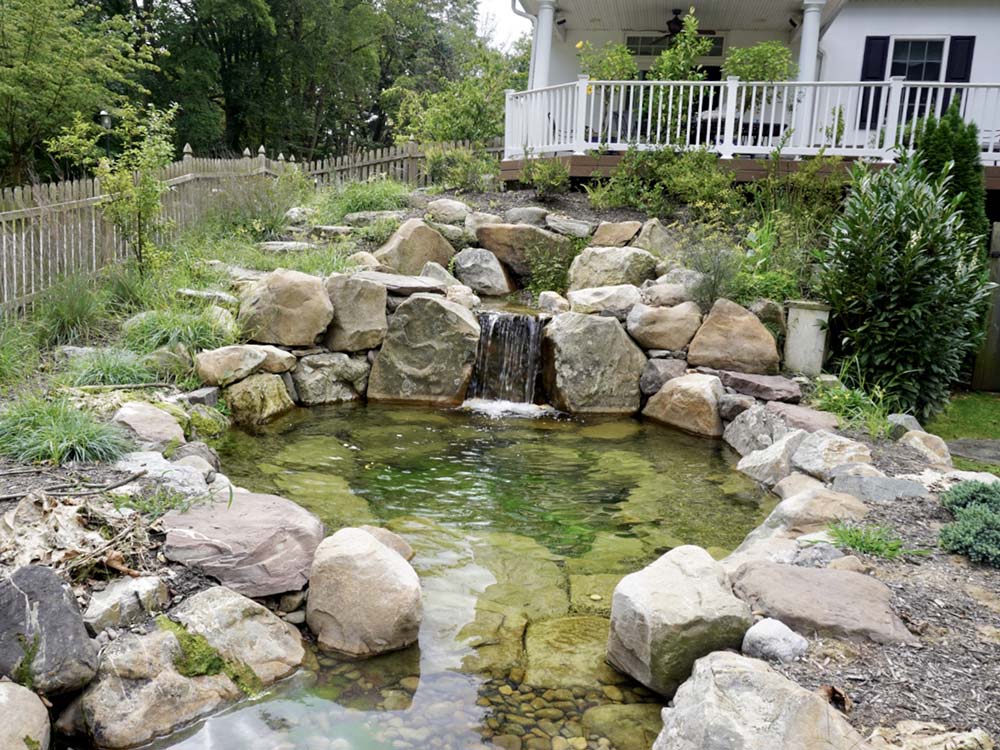
Your pond's dropping and your stomach does the thing: I have a leak.
Usually, you don't. Most of the time it's evaporation, a little splash off the waterfall, or a thirsty plant doing exactly what it was put there to do. But every so often it really is a leak — and the longer that one goes unnoticed, the more it chews through your liner, your pump, your fish, and your water bill.
So let's tell the two apart without you spending a Saturday panicking at the water's edge.
How much loss is actually normal?
In our summers, a perfectly healthy pond can lose a couple of inches a week just to evaporation, and more on a hot, dry, windy stretch. Add normal splash and what the plants drink up, and a few inches in a week can be completely fine. The question isn't "am I losing water?" It's "how fast, and where is it going?"
The bucket test
Before you call anyone, try this. Fill a five-gallon bucket with pond water and set it on a shelf or step of the pond so it gets the same sun and temperature as the pond itself. Mark the water level in the bucket and in the pond. Wait a day or two — and don't top off the pond. Then compare.
If the bucket and the pond dropped about the same, you're looking at evaporation. If the pond dropped noticeably more, you've probably got a leak or a splash issue worth chasing down.
Where leaks actually hide
Here's the part that surprises people: most "pond leaks" aren't holes in the bottom of the pond at all. In our years building and renovating ponds across Bucks, Montgomery, Chester, and Delaware counties, they almost always turn up in one of three spots — the waterfall and stream, where a settled rock or a folded liner edge lets water sneak out behind the falls; the skimmer faceplate, where the seal can loosen over time; or a plumbing connection buried under the gravel. A true puncture in the bottom liner is rare, and when we find one it's usually a fallen branch or a curious critter.
A quick tell: if the water drops to one specific level and then just stops, that level is usually right about where the leak is.
The easy way out
Chasing a leak yourself means lowering the water in stages, watching where it settles, pulling rock, checking liner edges, and putting it all back so it still looks natural. It's wet, muddy, all-day work, and one wrong guess sends you back to the start. Meanwhile the pump may be running dry and the fish are stressed.
This is the kind of thing a monthly plan quietly prevents. When we're on your pond every month, we're tracking water levels, adjusting rock and liner as the pond settles, and catching a loosening seal long before it becomes a real leak repair.
"They have been maintaining my pond for 10 years. They are very knowledgeable and have taught us a lot. They are pleasant to work with. I love my pond!"
— Dolores H., Facebook review
Call us right away, though, if you're losing more than an inch a day, the level's dropped below the skimmer, or your pump is sucking air — those aren't watch-and-wait. Otherwise, our maintenance packages take the whole worry off your plate. Start a conversation or call 215-880-6811.