
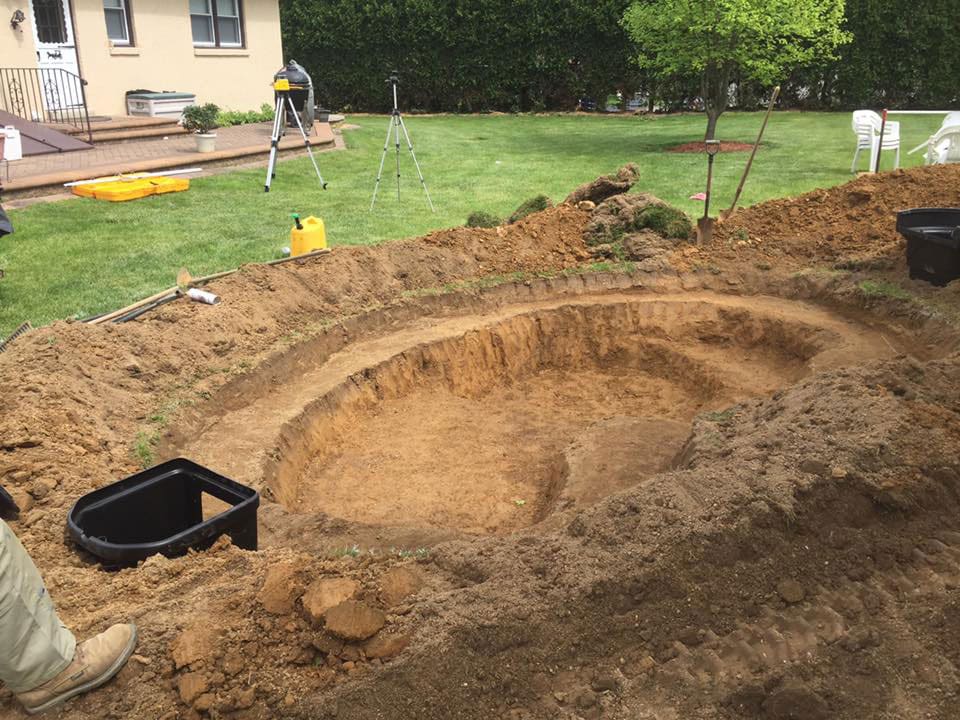
The liner is the single most consequential thing in your pond that you will never look at again. Once the rock and gravel go in, it is gone from view for the life of the pond. Which is exactly why it is worth understanding before you build.
The options, honestly
EPDM rubber is what most quality ponds around here use. It is a flexible synthetic rubber, typically 45 mil, and it will conform to whatever shape you excavate. It stays flexible in cold, which matters a great deal in a Philadelphia winter. Properly installed and protected, you are looking at decades.
One thing to insist on: fish safe EPDM. Roofing grade EPDM looks identical and costs less, and it contains compounds that will kill your koi. If a price seems surprisingly good, this is one of the places to ask.
Preformed rigid liners are the plastic shells sold at big box stores. They are genuinely easy, and they are genuinely small. The shape is fixed, the depth is usually inadequate for koi through a real winter, and the edges are hard to hide. Fine for a decorative water garden, not for a fish pond you care about.
Concrete gets asked about a lot because it sounds permanent. In our climate it usually is not. Freeze and thaw cycles crack it, and a cracked concrete pond is a genuinely miserable repair. There are good reasons to use it in formal applications, but durability is not the reason.
The part almost nobody asks about
Underlayment. It is the geotextile fabric that goes between the soil and the liner, and it is the reason your liner survives. Ground does not stay still. Soil settles, stones work their way upward through freeze and thaw, roots probe. Underlayment is what stands between all of that and a puncture.
Skipping or skimping on underlayment is one of the most common corners cut on cheap pond builds, and you will not find out for three or four years.
How liners actually fail
Almost never from the liner material wearing out. In our experience the real causes are, in order: punctures from below because underlayment was inadequate, seams that were field joined badly, damage at the waterfall and stream connections where the liner is stressed and folded, and physical damage from someone working in the pond with the wrong tools.
Which is worth knowing, because it means most liner failures are installation failures.
If you suspect a leak
Do not assume the liner. Most leaks we get called about turn out to be evaporation, a splashing waterfall throwing water outside the system, or a wicking problem at the edge where a stone or plant root is pulling water out by capillary action. Real liner punctures are the least common answer.
Here is how to find a pond leak, and if you would rather not chase it, leak detection and repair is something we do regularly.
Planning a build? The pond construction guide walks the whole process.