
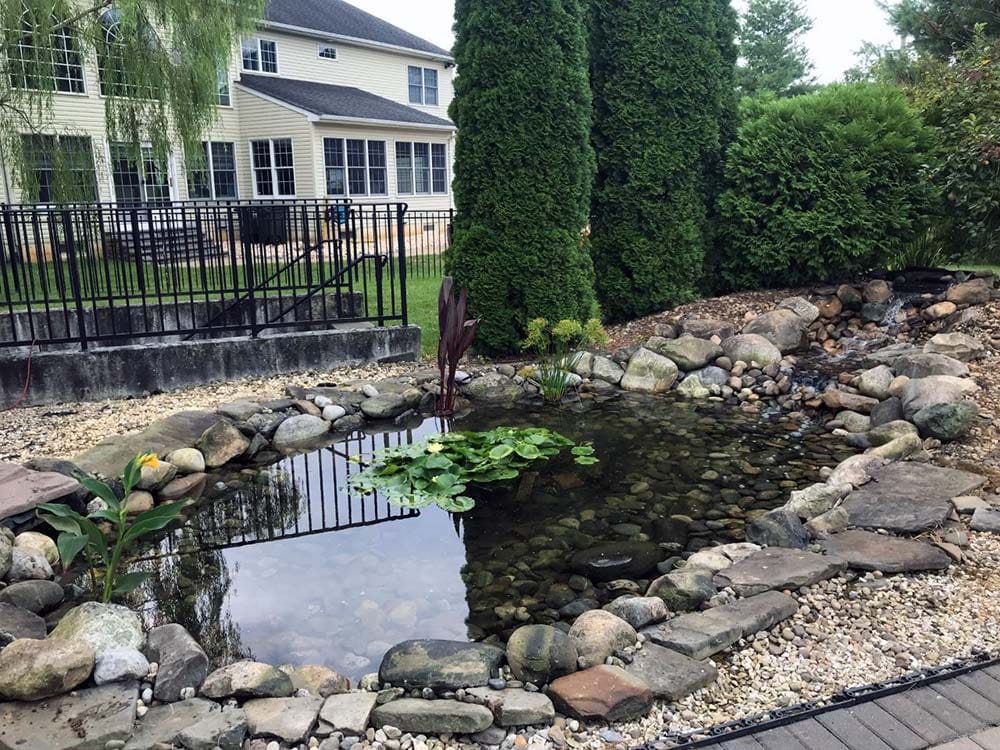
This is the question we get more than any other once the nights start dropping into the forties. Do I keep the waterfall running all winter, or do I shut the whole thing down?
There is no universal right answer, which is annoying but true. There is a right answer for your pond, though, and it usually comes down to three things: whether you have fish, how the feature was built, and how you honestly feel about walking outside in February to check on something.
First, clear up what winter running is actually for
A lot of people run their waterfall through the winter because they believe it is keeping their fish alive. It is not, or at least not in the way they think.
What koi need under ice is a gas exchange hole, an opening in the surface so the gases coming off the pond floor can escape and fresh oxygen can get in. A running waterfall can help maintain one. But an aerator or a de-icer does that same job for a fraction of the electricity, with far less that can go wrong, and it keeps doing it at two in the morning during an ice storm when nobody is watching.
So if fish safety is your reason, we would rather set you up with proper aeration and let you decide about the waterfall on its own merits. Which are real merits, by the way.
The case for running it
A waterfall running through a Pennsylvania winter is genuinely one of the best things about owning one. Ice builds up around the moving water in shapes you could never design on purpose, and it changes week to week. Steam comes off it on the coldest mornings. If you have lighting on the feature, January at five o'clock in the evening turns into the best show your yard puts on all year, at exactly the time of year when a backyard usually has nothing to offer.
Our clients who run their features through the winter are, almost without exception, glad they do.
The case against, and it is a real one
Here is what can go wrong. Ice builds up gradually in the waterfall channel, and at some point that ice dam quietly redirects the flow over the edge of the liner instead of back into the pond. The pump keeps doing exactly what it is supposed to do. It just does it into your yard. People discover this when the water level has dropped far enough to expose the pump, and by then you can be looking at a burned-out pump and a serious problem for the fish.
The other rule is absolute: if you run it, you run it continuously. A pump that gets switched off for a night in January can freeze solid in standing water in the plumbing. Winter running is all or nothing.
None of this is exotic. It just means winter running comes with a job attached, which is looking at the water level every few days and knowing what an ice dam looks like when one is forming.
How we usually call it
A disappearing waterfall with no fish in the picture is the easiest yes. There is nothing living to put at risk, so the worst case is a pump you have to replace. Keep an eye on the basin level and enjoy the ice.
A koi pond with a well-built waterfall, a generous stream, and an owner who does not mind checking on it is usually a yes too, with an aerator running as the actual insurance policy rather than the waterfall.
A pond with a narrow or shallow waterfall channel, or one belonging to someone who travels in the winter or would rather not think about it until April, is a shutdown. And a shutdown is not a defeat. Done properly, the pump comes out and gets stored, the plumbing is drained so nothing splits, the aerator goes in, and your fish overwinter beautifully in a still pond the way they have for a very long time.
One thing you should never do either way
Do not break the ice with a hammer, a shovel, or anything else. The shock waves travel through the water and can genuinely injure or kill koi. If you need to open a hole, set a pot of hot water on the ice and let it melt through.
Not sure which one you are?
That is a five-minute conversation, not a research project. Tell us about your feature and your fish and we will tell you straight which way we would go, and handle it either way as part of seasonal maintenance. Start a conversation or call 215-880-6811.