
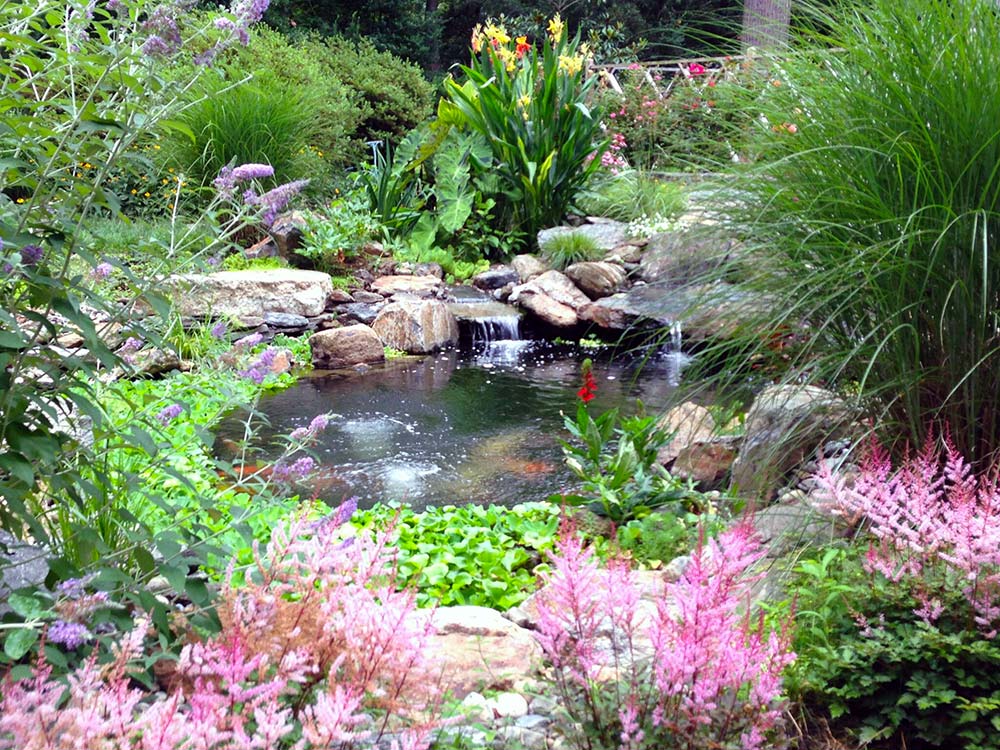
Build a pond in southeastern Pennsylvania and sooner or later something with a shell walks into it. Usually you did not invite it, usually you have no idea how it found you, and usually the first question is whether it is a problem.
Sometimes yes, mostly no. It depends entirely on which turtle you have.
The ones that are fine
Painted turtles are the common visitor around here, and they are good company. They bask on rocks, they eat insects and vegetation and the occasional bit of carrion, and they are not a meaningful threat to a healthy adult koi. If you have a painted turtle sunning itself on your waterfall, you have a compliment, not a problem. It means your pond reads as real habitat.
Red eared sliders turn up too, almost always as released pets. Same general story, though they get bigger and they will graze your plants harder than you would like.
The one that is a problem
Snapping turtles. These are a different animal entirely, in temperament and in what they will do to a pond.
A mature snapper will take fish, and it will take good ones, because it hunts from the bottom and ambushes. It will tear up plantings. It can damage liner edges and destabilize gravel. And it is genuinely dangerous to handle: a snapping turtle can reach much further back over its own shell than people expect, and the bite is not a joke.
They are also heavy, fast when they want to be, and completely unbothered by your opinion of them.
How to tell them apart
A snapper looks prehistoric and it looks wrong. Rough, ridged, often algae covered shell. A long thick tail with a serrated ridge along the top, which no painted turtle has. A large head it cannot fully withdraw. A hooked beak. And a posture that is more alligator than turtle.
Painted turtles are smooth, domed, modestly sized, with red and yellow markings along the shell edge and neck. If you are looking at a turtle and thinking that is a nice turtle, it is not a snapper. You will not wonder.
What to do
For the harmless ones, nothing. Let them be.
For a snapper, do not try to move it yourself. This is the specific piece of advice in this article we most want you to take. People get hurt doing this, and the ones who get hurt are usually the ones who were confident.
We relocate snapping turtles out of client ponds. It is not the most glamorous part of the job, but it is a normal part of it, and we would much rather get that call than the other one.
Keeping them out to begin with
Steep, well built edges help, since snappers walk in rather than climb. So does not having an easy overland route from a creek or wetland. And the same design thinking that keeps herons, raccoons and mink from your fish tends to make a pond less attractive to everything else.
Got something in your pond you would rather not have? Give us a call.