
Your koi don't need much from you in winter. They slow way down, stop eating, and settle near the bottom to wait out the cold. But there's one thing they absolutely need you to get right, and it's easy to overlook until it's too late.
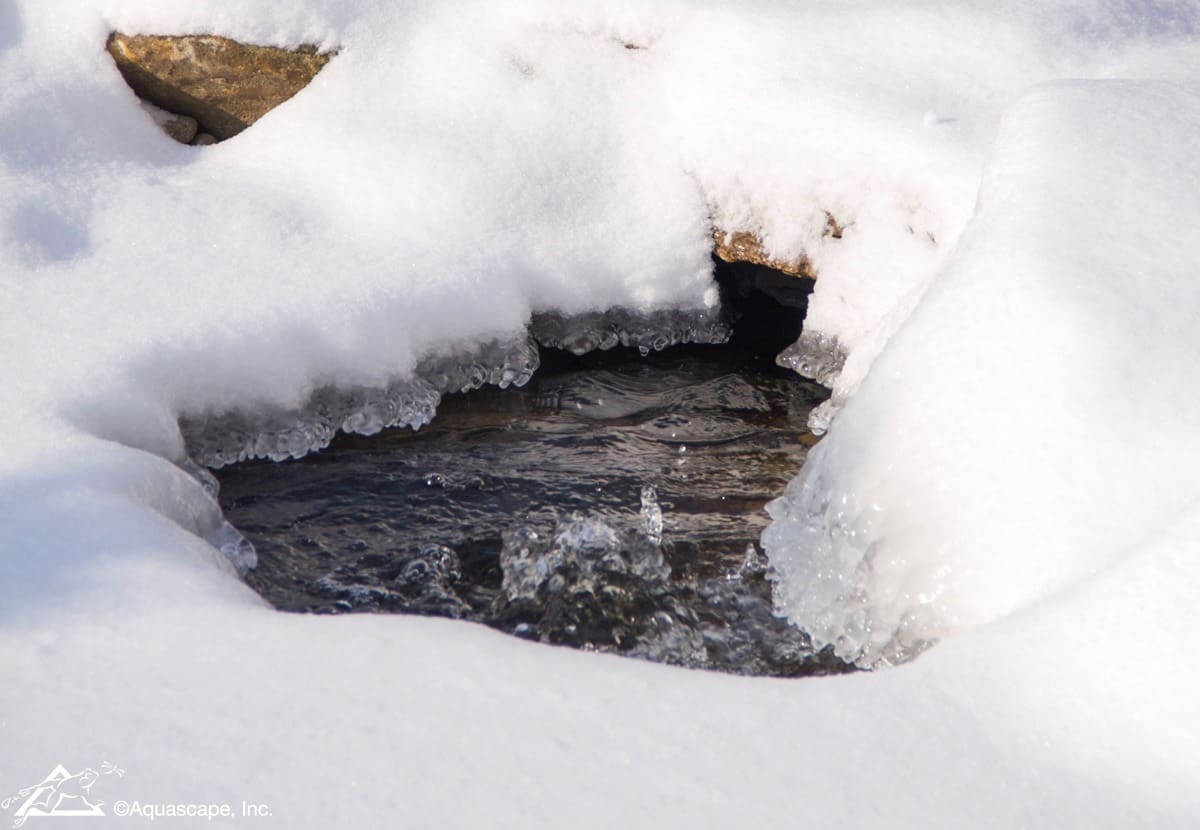
An open hole in the ice.
What actually happens under a frozen lid
When a pond ices over completely and stays that way for days, it seals shut. Fish waste and decomposing debris keep releasing gases all winter, and with nowhere to go, those toxic gases build up under the ice. At the same time, no oxygen can get in. It's a slow suffocation, and by the time you notice, the damage is done.
Keeping even a small opening in the ice lets the bad gases out and fresh oxygen in. That's the whole job. That's what winter aeration is for.
How we keep the hole open
Two tools, often working together. An aerator pushes a column of bubbles up from below, keeping water moving so it can't freeze solid at that spot. A floating de-icer adds gentle heat to hold a small area open through the hardest freezes. Around here, where a PA cold snap can lock a pond down for a week straight, the combination is the reliable bet.
One thing we tell every client: never smash the ice with a hammer to open a hole. The shock waves are brutal on fish that are already in a fragile, dormant state. Melt an opening — don't break one.
Getting your pond ready for winter is a big part of what our seasonal maintenance covers — and if you'd rather not think about it at all, a maintenance package means we handle the closing, the aeration setup, and the spring startup so your fish come through every winter just fine.
"They have been maintaining my pond for 10 years. They are very knowledgeable and have taught us a lot. They are pleasant to work with. I love my pond!"
— Dolores H., Facebook review
Not sure your pond is ready for the cold? Call 215-880-6811 or reach out here, and we'll make sure your koi have the open water they need to make it to spring.