
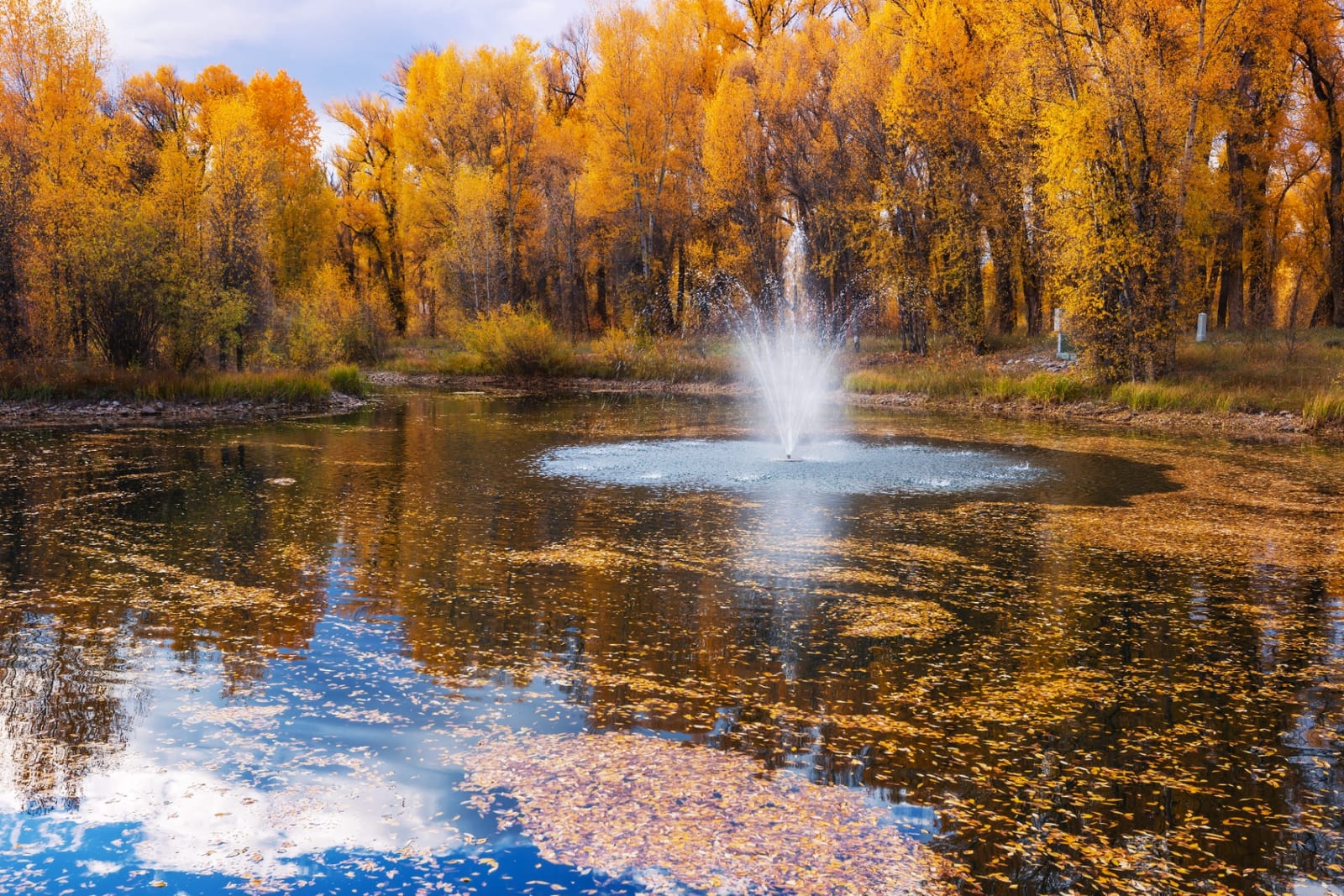
A lot of large ponds around here have a fountain in the middle. It shoots water into the air, it looks great from the clubhouse or the back deck, and everybody assumes it's keeping the pond healthy.
Sometimes it is. Often it's mostly decoration.
That's not a knock on fountains. We install plenty of them. But if you manage an HOA pond, a stormwater basin that holds water year round, or a big pond on an estate property in Chester or Bucks County, it's worth understanding what's actually happening under the surface. Because the bottom of the pond is where most of the trouble starts.
The problem you can't see: a pond in layers
In warm weather, a deeper pond separates into layers. The sun heats the top. The water down deep stays cold. Warm water is lighter, so it floats on top of the cold water like oil on vinegar, and the two stop mixing.
That bottom layer is cut off from the air. Whatever oxygen it had gets used up by everything decomposing down there: leaves, grass clippings, dead algae, fish waste. Once the oxygen runs out, things get ugly:
- Organic muck builds up instead of breaking down
- The sediment starts releasing nutrients back into the water, which feeds the next algae bloom
- You get that rotten egg smell when the bottom gets stirred up
- Fish crowd into the upper few feet of water because nothing below can support them
And then fall shows up. The surface cools until it's as heavy as the water underneath, and the whole pond mixes in a hurry. That's called turnover. If the bottom layer was big and stale enough, turnover can drop the oxygen level of the entire pond overnight. That's when we hear about fish kills in October.
So the real job of aeration isn't "make bubbles." It's keep the whole pond moving so the bottom never goes stale.
What a surface fountain actually does
A floating fountain throws water into the air. Some oxygen gets picked up along the way and the surface gets churned. That helps the top few feet.
In a shallow pond, that might be enough. In a pond deeper than six feet or so, the fountain mostly mixes water that was already in decent shape. The cold, stale layer on the bottom barely notices it's there.
What bottom aeration does differently
A bottom diffused aeration system works from the other end. A compressor sits on shore, usually in a small cabinet, and pushes air through weighted tubing out to diffusers resting on the pond floor. Each diffuser releases a column of fine bubbles.
The bubbles themselves don't add much oxygen. What they do is lift water. Cold bottom water rides up with the bubbles to the surface, picks up oxygen from the air, and the circulation pattern pulls surface water back down. Run that around the clock and the pond stops layering. Top to bottom, the water stays mixed and oxygenated.
Over time, that changes things:
Muck starts to shrink. The bacteria that break down organic sediment efficiently need oxygen. Give them oxygen and they get to work. This isn't overnight. Think seasons, not weeks.
Algae has less to eat. Oxygenated sediment holds on to nutrients that stale sediment would release. Less food in the water column means fewer blooms. Aeration doesn't replace a real algae and aquatic weed plan, but it makes that plan work much better.
Fish get the whole pond back. And a well-aerated pond rarely has the kind of turnover crash that kills fish in the fall.
We're certified installers of AirMax aeration systems, and sizing is where the real expertise comes in. Depth, surface area, the shape of the pond, where the coves and dead spots are, how much shade it gets. Two ponds with the same acreage can need very different setups.
One thing people get wrong: turning it on
If you add bottom aeration to a pond that has been sitting stratified all summer, don't just flip it on and walk away. Mixing all that stale bottom water into the rest of the pond at once can cause the very fish kill you were trying to prevent.
New systems should be started gradually, running for short stretches at first and increasing over a week or two. That's the kind of detail that's easy to miss if the system was bought online and dropped in by whoever had a boat that weekend.
What about winter?
Aeration in winter is a bit different, and this part matters a lot for HOAs.
In the cold months, the warmest water in a pond is actually at the bottom, and fish settle down there for the winter. Running diffusers at full depth all winter can mix that warmer water up and chill the whole pond. That's why the usual approach is to move diffusers into shallower water for the season, or run fewer of them. The system still keeps a hole open in the ice for gas exchange, without stirring up the whole pond.
And here is the safety piece. Any aerated pond will have open water or thin ice over the diffusers, and the ice around that area can look solid when it isn't. If your pond is anywhere near where kids, dogs or neighbors walk, it needs clear "thin ice" signage every winter. For HOA boards and property managers, that's not optional.
For backyard koi ponds, the winter conversation is a little different, and we cover it in the benefits of a winter pond aerator.
Questions we get from HOA boards and property managers
Should we get rid of our fountain? Usually not. Residents love it. In a lot of cases the best answer is to keep the fountain for looks and add bottom aeration to do the heavy lifting.
Does it run all the time? For the best results, yes. The compressors are built for continuous duty. Some properties run them on a timer, but a pond that is mixed only part of the day can start layering again.
How long until we see a difference? Water clarity and smell often improve within the first season. Muck reduction is a multi-year story.
Our basin is a stormwater pond. Does any of this apply? If it holds water year round, absolutely. Wet stormwater ponds collect a lot of runoff and the nutrients that come with it, so they tend to layer and bloom even faster. Our guide to retention and detention basins goes deeper on that side of things.
Healthy lakes are managed, not rescued
We look after large ponds and lakes up to about five acres across Greater Philadelphia and South Jersey, for estates, HOAs and commercial properties. Aeration is almost always the foundation, and everything else in a good lake management program gets easier once it's working. If you want the bigger picture, start with our overview of lake and large pond management.
If your pond has a fountain, a muck problem and a history of summer blooms, let's talk about what's going on under the surface. Start a Conversation or call 215-880-6811.