
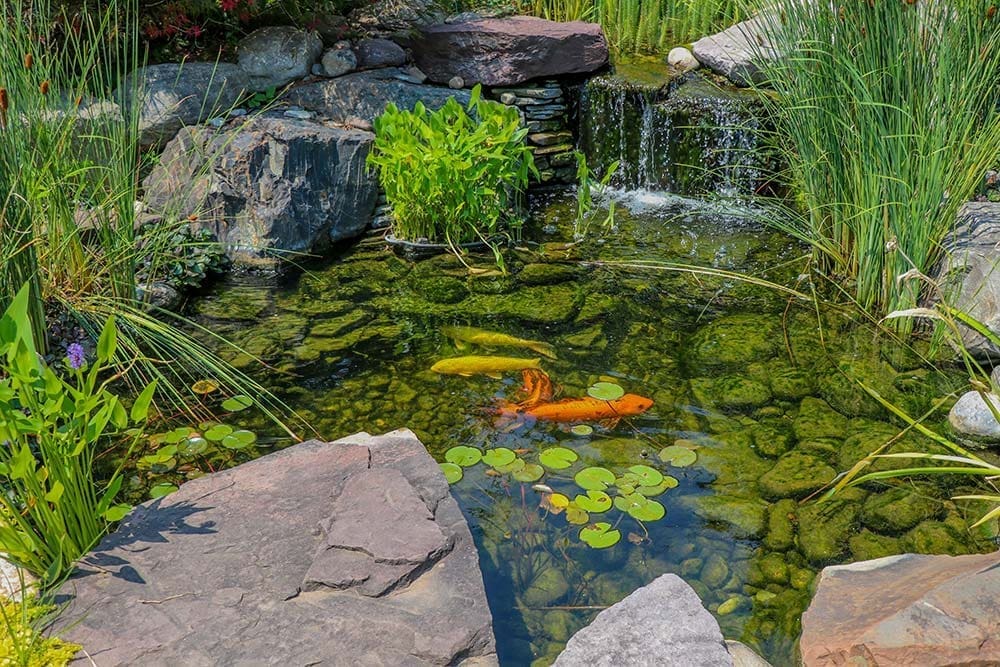
Koi are not difficult fish. They are hardy, long lived, and forgiving of almost everything except a badly built pond and an owner who is guessing. Most of the koi problems we get called out for in the Philadelphia area trace back to one of a handful of causes, and nearly all of them are preventable.
This is the overview. Each section links to a deeper piece if that is the part you are wrestling with.
It starts with the pond, not the fish
You cannot care your way out of a pond that was built wrong. Depth is the one that bites people hardest around here, because a pond that is too shallow cooks in August and freezes too far down in January. We wrote a whole piece on how deep a koi pond should be and why it matters more than almost any other decision.
The other structural piece people skip is shelter. Koi need somewhere to be that is not exposed, both for temperature and for safety. That is what a fish cave is for.
Feeding is where most mistakes happen
Koi feeding is temperature driven, not calendar driven, and that trips up almost every new owner. Their metabolism follows the water. Feed a high protein food into cold water and it sits in the fish undigested, which is how healthy koi get sick in spring and fall.
Start with how, when, and what to feed your pond fish, and if you are coming out of winter, read feeding koi in spring before you drop the first pellet in.
The two seasons that actually test a pond
Philadelphia summers get hot enough that dissolved oxygen becomes the limiting factor. Warm water simply holds less of it, and that is when fish get stressed. Here is what to do about koi and heat, and what to do with a hot pond.
Winter is the other one, and it is less about cold than about gas exchange. Fish do not starve under ice. They suffocate when the surface seals over completely and waste gases have nowhere to go. That is the whole reason fall matters so much, and why we handle netting, cleanouts, and winterization as one sequence rather than three unrelated jobs.
Everything wants to eat your fish
Herons, raccoons, mink, and the occasional visitor you did not expect. This is a solvable problem, and mostly a design one. Start with protecting koi from pond predators.
Plants, and the koi who eat them
Plants do real work in a koi pond, shading the water and pulling nutrients that would otherwise feed algae. The complication is that koi treat them as a salad bar. There are ways around that, covered in keeping koi from eating your pond plants.
The long game
Well kept koi outlive most family pets by a wide margin, which is worth knowing before you buy your first ones. See how long koi actually live.
If you would rather not manage all of this yourself, that is what our maintenance plans exist for. And if you are still at the thinking-about-it stage, our koi pond design and installation page is the place to start.