
"How long will this thing last?" is one of the most reasonable questions anyone asks before building a pond, and one of the hardest to get a straight answer to. The honest answer is that a pond is not one thing. It is a hole in the ground, a waterproof layer, a circulation system, a filter and a lot of stone, and each of those parts ages on its own schedule.
Some of it will outlast the house. Some of it is designed to be replaced every so often, the way you replace the filter in your furnace. Knowing which is which is what separates a pond that quietly works for twenty years from one that turns into a project every spring.
The parts that last essentially forever
The excavation and the shape of the pond. Once the basin is dug, shelved and settled, it does not wear out. The ground stays where it was put.
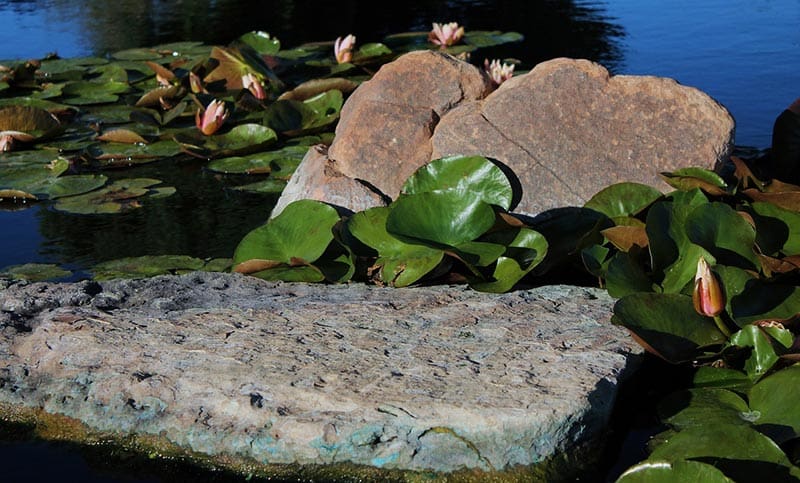
Rock and gravel. Stone does not break down on any timescale a homeowner will notice. Boulders may shift if they were set on loose fill, and gravel collects sediment that needs cleaning out, but the rock itself is permanent. This is a big part of why a well built pond can be renovated rather than rebuilt from scratch years down the road.
The liner: decades, if it is protected
The liner is the part people worry about most, and it is usually not the part that fails first. A quality rubber liner that is fully covered and laid over proper underlayment can last for decades. Liners carry the manufacturer's warranty against material defects, but in practice the material is rarely the problem.
What shortens a liner's life is almost always installation:
- No underlayment, or too little. Rocks and roots work against the bottom of the liner over years. A protective underlayment layer is cheap insurance.
- Exposed edges. Sunlight breaks down liner material that is left uncovered. A liner that is tucked behind stone and soil at the edges lasts far longer than one that peeks out around the rim.
- Roots. A pond placed too close to certain trees will be fighting root pressure for its entire life. Siting matters, and we cover that in our guide to where your pond should go.
- Edges that settle. When the rim of the pond sinks in one spot, water finds its way over the edge and behind the liner. That reads like a leak in the liner when it is actually a grading problem.
If you want the full picture on materials and failure points, our pond liner guide goes deeper.
The pump: the hardest working part of the pond
The pump runs around the clock, so it is the component you should expect to replace at some point. How long it lasts varies widely with the type of pump, how many hours it runs, and how it is treated. A pump that is sized correctly and kept clean can give you many years. A pump that is undersized, clogged with debris, or allowed to run dry can fail in a single season.
The things that kill pumps are predictable:
- Running dry. If the water level drops below the intake, the pump overheats. This is the single most common cause of an early pump failure we see.
- Clogged intakes. A pump straining against a packed skimmer basket works harder and runs hotter.
- Freezing. Water left in a pump or plumbing over a hard freeze can crack housings and fittings.
- Wrong size for the job. A pump pushing more head height than it was built for is always working at its limit.
When we install a pump, it carries a 3-year warranty on our side, and we handle the warranty claim for you. If a pump is acting up, our article on pond pump repairs walks through the warning signs.
Filtration, plumbing and lighting
Skimmer and biological filter housings are durable boxes that last many years. The pieces inside them, nets, baskets, mats and media, are maintenance items that wear and get replaced on a normal cycle. If you are not sure what each piece does, we explain it in how pond filtration works.
Plumbing that is buried at the right depth and protected through the winter is long lived. Most plumbing trouble comes from freezing, from fittings that were never glued or clamped properly, or from a shovel during later landscaping. Whether you shut your system down or keep it running through the cold months affects this, and we lay out both options in run your waterfall through winter or shut it down.
Lighting has come a long way. Modern LED fixtures last for years, and when lighting fails it is usually a connection or a transformer rather than the light itself. Low voltage lighting is also easy to repair or upgrade without disturbing the pond.
The living parts: fish and plants
Fish and plants do not wear out the way equipment does, but they are part of the answer. Koi in particular can live a remarkably long time in a healthy pond, often outliving the original pump several times over. Our post on how long koi fish live covers what affects that.
Hardy aquatic plants come back year after year and many need dividing every few seasons because they grow, not because they fail.
What actually ends a pond's life
In more than 25 years of building and repairing ponds around Greater Philadelphia, we have seen very few ponds fail because a material simply reached the end of its life. When a pond gets to the point of needing major work, it is usually one of these:
- It was built without the basics. No underlayment, too little filtration, a pump that never matched the waterfall, an edge that was never leveled.
- Years of deferred maintenance. Sludge builds on the bottom, the filter stops doing its job, and the whole system gradually loses its balance.
- The yard changed around it. New trees, new grading, a new patio that sends runoff straight into the pond.
- The owner's needs changed. Someone wants fish in a pond that was built as a water garden, or wants a pond that needs less attention.
The good news is that most of these are fixable without starting over. The rock, the basin and often the liner can stay, while the circulation, filtration and edges are rebuilt. We compare the two paths in pond renovation vs pond repair, and if you are not sure which side of that line you are on, these signs are a good place to start.
How to make your pond last longer
You do not have to do much to stretch the life of a pond. You just have to do the right things consistently:
- Keep the water level up, especially in summer when evaporation is high. If you are losing more water than you think you should, our post on pond evaporation vs a leak helps you tell the difference.
- Keep skimmer baskets and pump intakes clear, more often during leaf season.
- Plan for winter instead of letting the first hard freeze make the decision for you.
- Fix small problems while they are small. A wet spot near the edge, a pump that sounds different, a waterfall that has lost flow. All of these are cheaper in week one than in month six.
- Get a professional set of eyes on it once or twice a year. Most of the expensive repairs we do started as something that would have been obvious on a routine visit.
That last point is exactly what our maintenance packages are built around. Someone who knows what healthy looks like checks the system on a schedule, catches the small stuff, and takes the guesswork out of keeping the pond running.
Built right, a pond is a long term part of your home
A pond is not a disposable feature. Built properly and looked after, it becomes one of the longest lasting parts of your landscape. The structure stays, the stone stays, and the parts that do wear out are designed to be swapped without tearing anything apart.
If you have an older pond and want to know honestly how much life it has left, or you are planning a new one and want it built to last, Start a Conversation or call us at 215-880-6811. We start with a free phone call to understand what you have and what you want, and you can see exactly what our workmanship and equipment coverage includes on our warranty page.